Yes — if you are building an inground fiberglass pool in Toronto, you need a pool enclosure permit before the pool can hold water, and your plans have to clear zoning and electrical approvals first. This guide covers pool permit Toronto rules specifically: what the City requires, the fence and gate bylaw (Municipal Code Chapter 447), setbacks, how to apply, and the inspection that stands between you and your first swim. It is general guidance, not legal advice — confirm current details with Toronto Building and 311.
In this guide
- Do you need a pool permit in Toronto?
- Which permits a Toronto pool needs
- Toronto’s fence and enclosure bylaw (Chapter 447)
- Setbacks and zoning in Toronto
- Electrical (ESA) and other approvals
- How to apply for a Toronto pool enclosure permit
- Before you request a quote in Toronto
- Toronto pool permit FAQs
Do you need a pool permit in Toronto?
In Toronto, the fiberglass pool shell itself does not usually require a building permit, but you do need a Pool Fence Enclosure Permit for the barrier around the pool, and your pool’s location has to be confirmed against zoning first. You cannot fill the pool or let water collect in it until the City inspects and approves the enclosure. If you want the province-wide picture first, start with our Ontario pool permit guide; this article is the Toronto-specific version.
Which permits a Toronto pool needs
For a typical Toronto backyard fiberglass pool you are dealing with three approvals: a zoning check confirming the pool location, the Pool Fence Enclosure Permit, and electrical authorization through the ESA. A gas heater, a raised deck, or work on a ravine lot can each add a separate approval on top.
Toronto’s fence and enclosure bylaw (Chapter 447)
Toronto’s pool enclosure rules live in Municipal Code Chapter 447 (Fences). The key requirements:
- Height: at least 1.2 m for a single residential property; 1.8 m for multi-residential and non-residential properties.
- Non-climbable zone: nothing climbable between 10 cm and 1.2 m above the ground that could help a child climb.
- Gates: self-closing and self-latching, kept locked whenever the pool area is not in use; double gates need a lockable drop bolt.
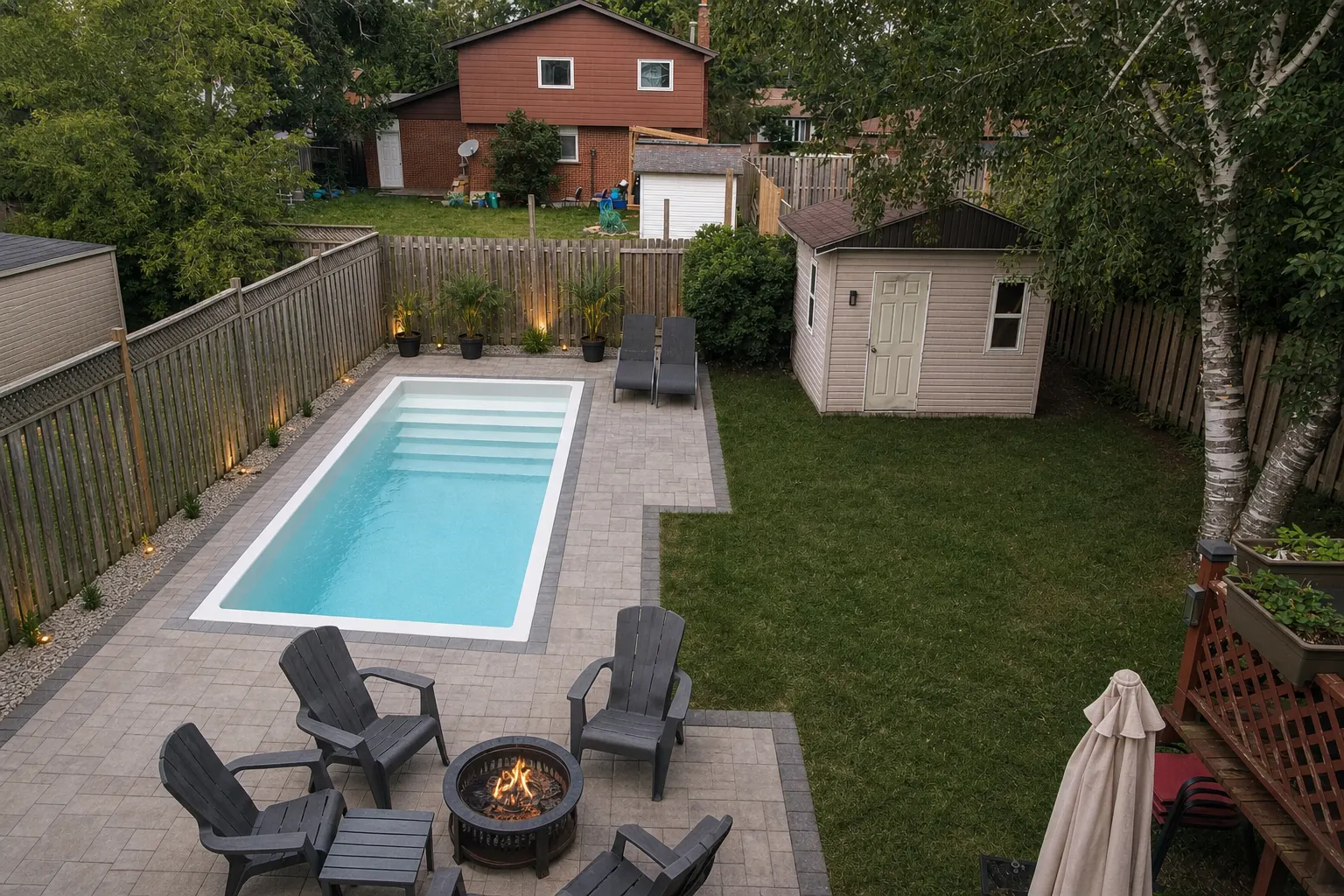
- Four-sided isolation: the pool must be fully enclosed on all sides — an existing yard fence is not enough if a door from the house opens directly onto the pool area.
Setbacks and zoning in Toronto
Before the enclosure permit, Toronto Building issues a zoning certificate confirming the pool meets setback rules from property lines, the house, easements, and overhead hydro lines. You submit a plot plan or survey showing exactly where the pool sits. Toronto’s older lots and tight side yards are the most common reason a plan has to shift — sorting it out before excavation is far cheaper than discovering it on build day.
Electrical (ESA) and other approvals
Pool pumps, heaters, and lighting must be installed by a licensed electrical contractor and authorized through the Electrical Safety Authority, with proper bonding and grounding — a separate approval from your enclosure permit. A gas heater carries its own permit and inspection. And because much of Toronto sits near ravines and watercourses, a conservation authority (TRCA) approval may apply if your lot is in a regulated area — identify that early, since it is the approval most likely to add weeks.
How to apply for a Toronto pool enclosure permit
- Get an approved zoning certificate from Toronto Building (416-397-5330).
- Submit the Pool Fence Enclosure Permit application with the zoning certificate and site plans to MLSPoolPermits@toronto.ca.
- Allow roughly 10–20 business days for review.
- Build the compliant enclosure.
- Book the City inspection through 311 — and only fill the pool once it passes.
Before you request a quote in Toronto
- Check whether your lot is near a ravine, valley, or watercourse (possible TRCA review).
- Locate easements and overhead hydro lines, and have a site plan or survey ready.
- Decide on your heater type (gas vs. electric heat pump).
- Photograph your backyard access and note gate widths — Toronto’s narrow side yards often affect delivery and excavation.
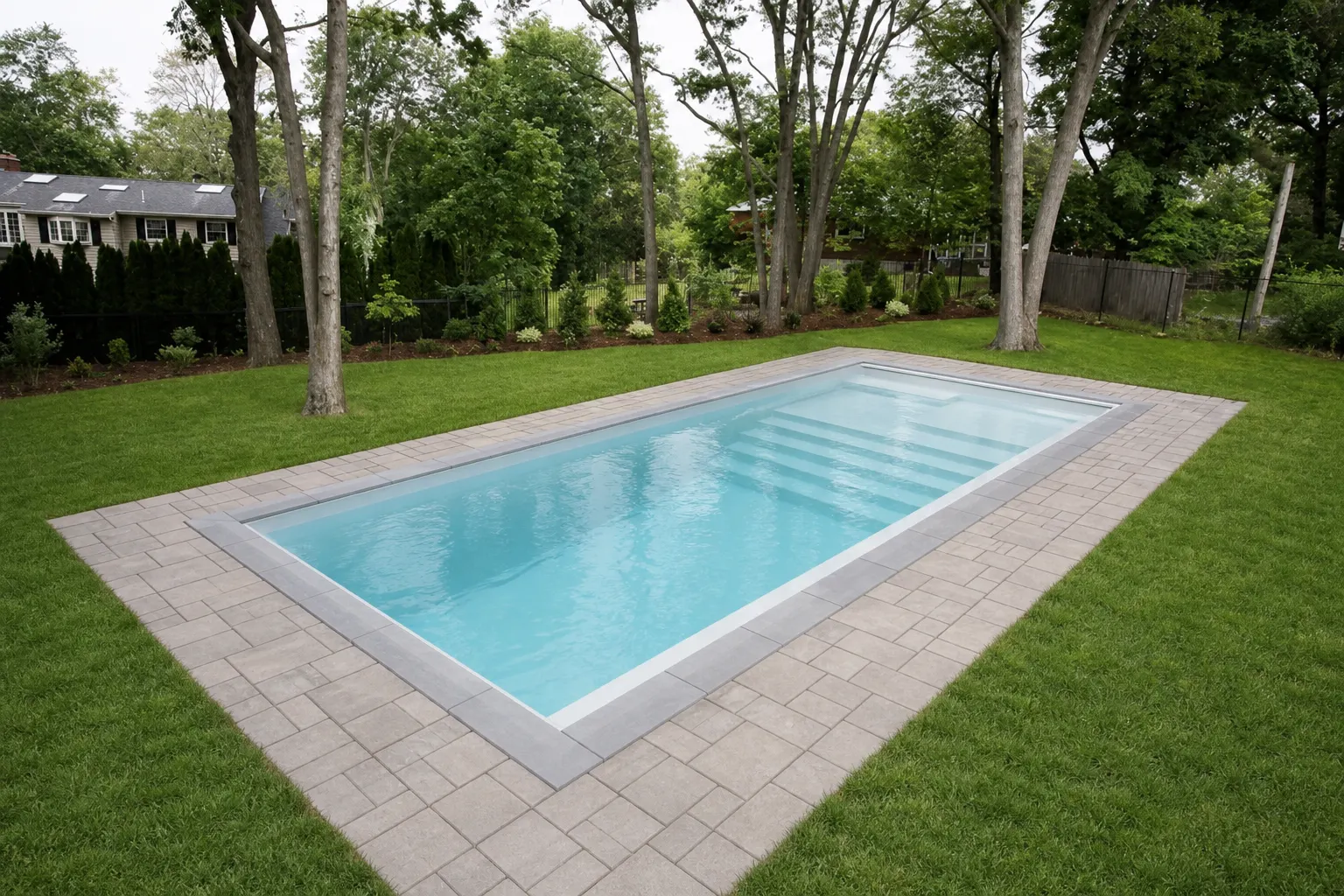
Okeanos plans Toronto pools around access, placement, and local requirements so nothing surprises you at permit or inspection. See our Toronto fiberglass pools page, or book a consultation and we will map the approvals to your backyard.
Toronto pool permit FAQs
Do you need a permit for a pool in Toronto?
Yes. A Pool Fence Enclosure Permit is required for an outdoor pool in Toronto, and the pool’s location must first pass a zoning check. The fiberglass shell itself usually needs no building permit, but you cannot fill the pool until the City inspects the enclosure.
How high does a pool fence have to be in Toronto?
At least 1.2 metres for a single residential property (1.8 metres for multi-residential and non-residential), with nothing climbable between 10 cm and 1.2 m, and self-closing, self-latching gates kept locked when the pool is not in use.
How do you apply for a pool permit in Toronto?
Get a zoning certificate from Toronto Building, then submit the Pool Fence Enclosure Permit application with your site plans to MLSPoolPermits@toronto.ca. Review typically takes 10–20 business days, and a City inspection is required before filling.
Can you fill the pool before the inspection?
No. Toronto prohibits filling a pool or letting water collect in it until the City has inspected and confirmed a compliant enclosure. Book the inspection through 311.
General information for Toronto homeowners, not legal advice. Pool bylaws are set and updated by the City of Toronto; confirm current requirements with Toronto Building and 311 before you build.